
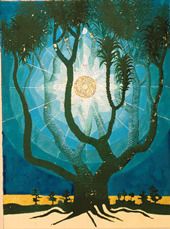
What does Lent mean? In order for us to really understand the meaning of Lent, we need to get a better idea of the origin of the word “Lent.” We get the word Lent from the Old English lencten, which means “Spring time.” English Catholics started using the word Lent because the season falls during the Spring.
The original meaning was associated with the season of the year, the season of new growth and transformation. That's not what we typically think of when we think of Lent. Traditionally, Lent is thought of as the time when we think ill of ourselves and how bad we are...and consequently, we believe less ourselves. That is not the point of Lent.
In Jungian psychology, there is something called the shadow that refers to an unconscious aspect of the personality which the conscious ego does not identify in itself. Because one tends to reject or remain ignorant of the least desirable aspects of one's personality, the shadow is largely negative. "Everyone carries a shadow," Jung wrote, "and the less it is embodied in the individual's conscious life, the blacker and denser it is." ("Psychology and Religion." In CW 11: Psychology and Religion: West and East. P.131)
It is naive of us to think that we don't have this as part of our personalities. It is true of every single human being. However, that doesn't mean that during this time of the year (or any time) we should be beating up ourselves. What I do think it means is that we need to take an honest look at ourselves, make a realistic evaluation, and make the necessary changes that will lead to growth and transformation. I know, not what you were thinking about doing today.
The Christian life is a life of discipleship. Jesus asks us to follow him. That means walking in the way of Jesus, following his teachings, and not our own way. By the way, that's the definition of repentance. Sometimes, in order for new life to spring forth, the old must die.
Jesus said, "Very truly, I tell you, unless a grain of wheat falls into the earth and dies, it remains just a single grain; but if it dies, it bears much fruit." John 12:24

No comments:
Post a Comment